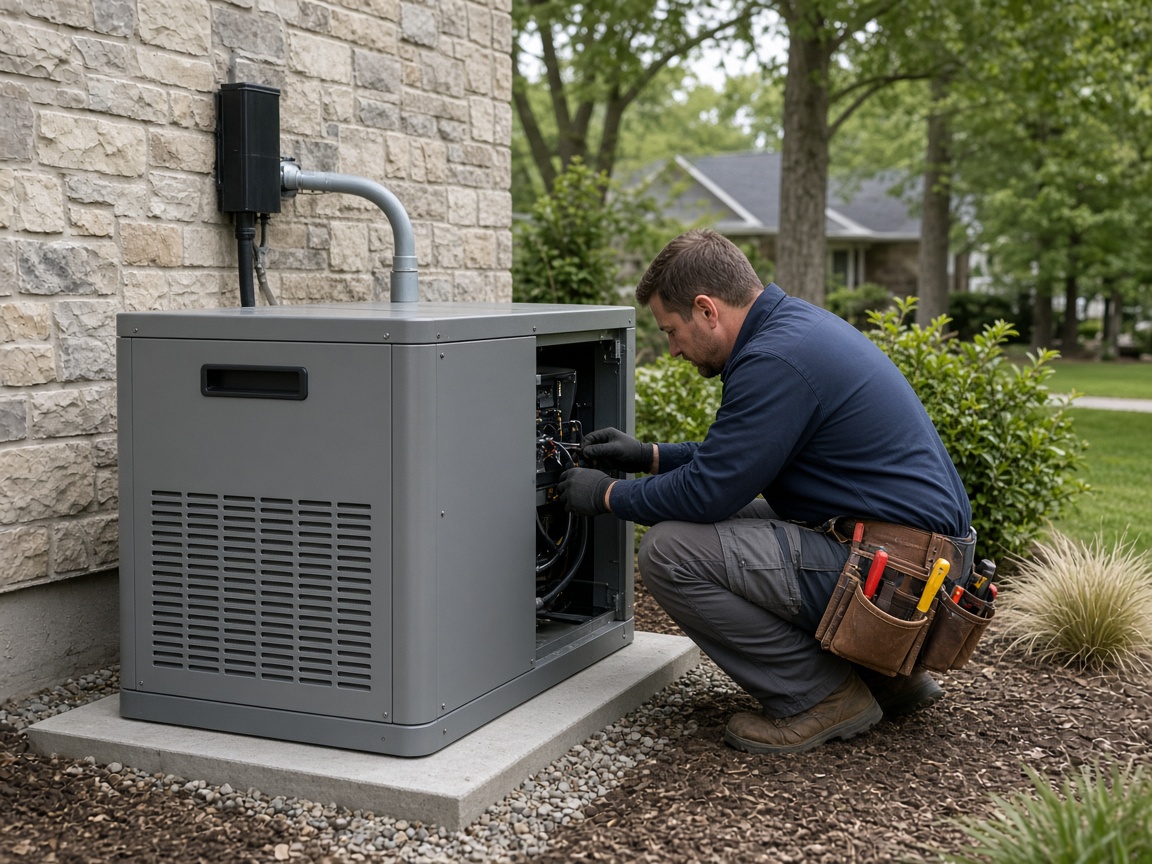
Lake Forest homes built between 1970 and 1999 often carry 60-100 amp panels that cannot support a generator without first upgrading the service entrance and grounding. Orange County inspectors require separate grounding electrodes and proper bonding when any backup system ties into the main panel, especially on properties governed by HOAs in neighborhoods such as Foothill Ranch and Baker Ranch. Natural gas lines must be sized correctly for the generator load, and exterior placement must respect both HOA aesthetic rules and the 5-foot clearance from windows required by code.
Santa Ana wind events trigger PSPS outages that can last days, making automatic transfer switches essential rather than manual interlocks. Many Portola Hills and Serrano properties sit on sloped lots where exhaust routing and concrete pads require extra engineering to meet wind-load standards. Skipping the permit process or using undersized wire creates immediate rejection at inspection and leaves the home without legal backup during the next wind-driven shutoff.
Battery systems paired with generators need charge controllers rated for the local 240-volt split-phase service and must be placed in ventilated enclosures to handle summer heat. Whole-home standby units require load calculations that factor in well pumps, EV chargers, and air conditioning common in Lake Forest, rather than relying on nameplate ratings alone.
Technician insight
In Lake Forest the thing that catches most people out with Generator & Backup Power Installation is discovering the 1970s-1990s 100A panel cannot accept a generator until the service is upgraded and re-grounded to current Orange County standards. Santa Ana wind PSPS events make automatic transfer switches necessary, yet HOA approval for pad location and exhaust routing often adds weeks before work can begin.
Baker Ranch Outage During Wind Event
A home lost power for three days during a Santa Ana PSPS. The existing 100A panel lacked capacity and grounding for any generator. We upgraded the service, coordinated HOA placement on the side yard, installed a 22 kW unit with automatic transfer switch, and passed county inspection on the first visit.
Generator & Backup Power Installation Services We Offer
✓Whole Home Standby Generator Installation
Permanent natural-gas or propane units sized to run essential circuits through automatic transfer during PSPS events.
✓Automatic Transfer Switch Installation
Seamless switchgear that detects utility loss and starts the generator without manual intervention, required for most HOA-governed properties.
✓Panel Upgrade for Generator Readiness
Replacement of 60-100A panels with 200A service and proper grounding to meet Orange County requirements before generator connection.
✓Portable Generator Interlock Kit
Safe backfeed prevention hardware installed at the main panel for homes that prefer portable units over permanent standby systems.
✓Natural Gas Line Sizing and Extension
Proper diameter piping from the meter to the generator pad that maintains pressure under full load without affecting household appliances.
✓Generator Load Calculation and Sizing
Detailed assessment of circuits, starting surges, and future EV or battery additions to avoid undersized or oversized equipment.
Generator & Backup Power Installation Cost in Lake Forest, CA
| Service | Typical Range | What Affects It |
|---|---|---|
| Whole-home standby generator unit | $5,500–$14,000 | 22–48 kW natural gas models |
| Automatic transfer switch and wiring | $1,800–$4,200 | Includes labor and conduit runs |
| Panel upgrade to 200A | $2,400–$5,800 | Required on many 1970-1999 homes |
| Natural gas line extension | $900–$2,600 | Depends on distance and trenching |
| HOA permit and inspection fees | $350–$850 | Varies by association and county |
Ranges are typical for Lake Forest, CA and confirmed with an exact written quote before any work starts.
How it works
- 1
Site Assessment
Measure existing panel amperage, evaluate HOA placement rules, and calculate loads for Lake Forest homes.
- 2
Permitting and HOA Coordination
Submit plans to Orange County and obtain association approval for exterior equipment and gas routing.
- 3
Equipment Placement and Wiring
Install concrete pad, run conduit, set transfer switch, and bond per county grounding standards.
- 4
Testing and Final Inspection
Simulate outage, verify automatic start, and schedule county inspection for sign-off.
Pricing
Upfront quotes provided after site visit; cost varies with generator size, panel condition, and HOA requirements.