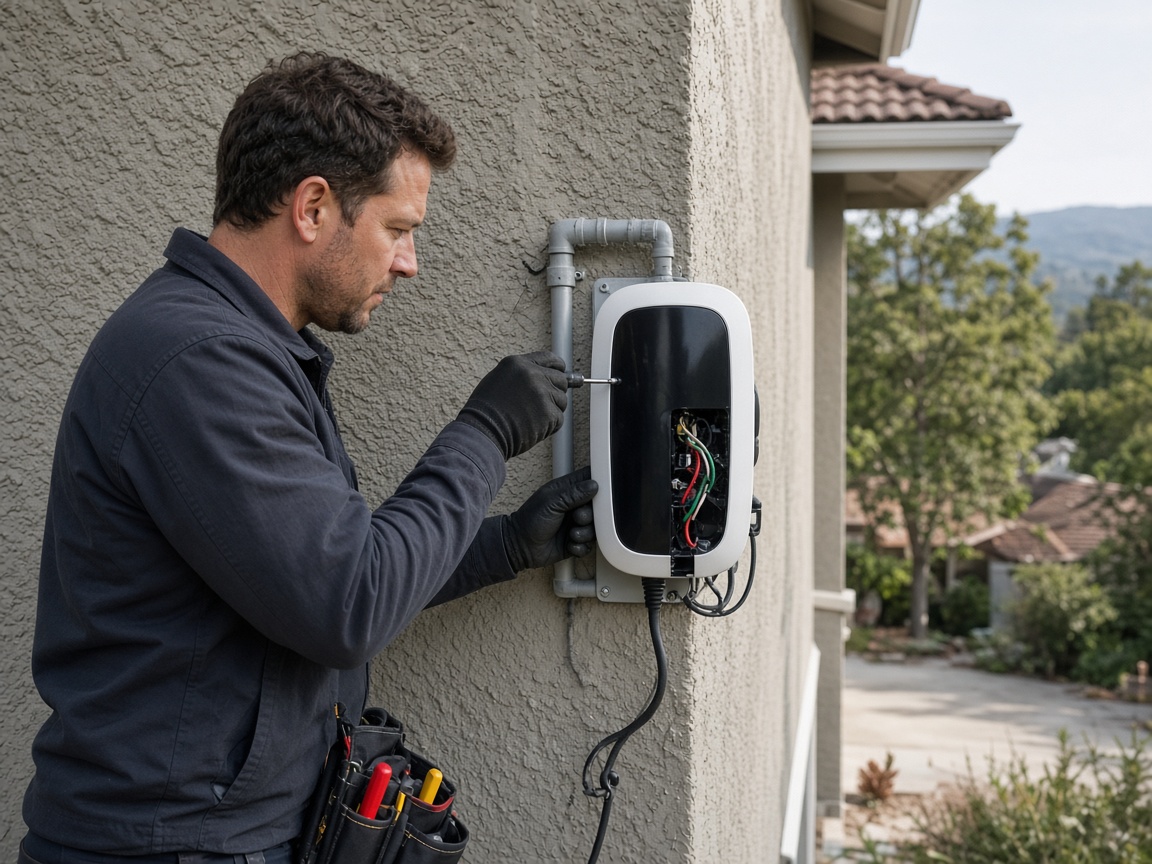
Lake Forest homes built between 1970 and 1999 often carry 60- or 100-amp service, which cannot support a Level 2 charger without overloading the main breaker or creating hot spots on aluminum feeders. A proper installation starts with a load calculation that factors in existing air conditioning, electric dryers, and any future additions. When the panel lacks capacity, we run new conduit and conductors to a subpanel or replace the service equipment entirely rather than attempting a simple swap.
Orange County requires grounding electrode upgrades and GFCI protection on all outdoor circuits, plus weatherproof enclosures rated for direct exposure. Santa Ana wind events trigger PSPS shutoffs, so we install surge protection at the panel and ensure the charger circuit remains isolated from sensitive electronics. In the 80 percent of neighborhoods under HOA governance, we prepare the single-line diagram and equipment cut sheets the architectural review committee expects before any trenching begins.
Wiring routes must respect setbacks from irrigation lines and avoid the shallow root zones common in Whiting Ranch Wilderness Park-adjacent properties. We use 6 AWG copper in 1-inch PVC or EMT for runs up to 50 feet, upsizing to 4 AWG when voltage drop exceeds three percent. All terminations receive torque verification and infrared scanning before the final inspection.
Homeowners frequently discover that a charger mounted on a shared wall or near a property line triggers neighbor notification requirements. We coordinate these details during the initial site visit so the permit package moves through the city without revisions.
Technician insight
In Lake Forest the thing that catches most people out with EV Charger Installation is the combination of 1970s-era 100-amp panels and HOA rules that require drawings before any exterior work. Homeowners assume a charger can simply be added, then discover the service equipment must be replaced first and the architectural committee needs three weeks to review.
Panel Upgrade in Baker Ranch
A homeowner requested a 48-amp charger on a 100-amp panel that already fed two air conditioners and an electric range. The load calculation showed the service would trip under full charge. We replaced the main panel with 200-amp equipment, added a dedicated 60-amp EV breaker, and routed conduit along the side yard to the garage. The charger now operates without nuisance trips and passed the county inspection on the first visit.
EV Charger Installation Services We Offer
✓Level 2 Charger Installation
Hardwired 240-volt circuit sized for 40- to 60-amp continuous loads with proper disconnect and weatherproof receptacle or hardwire termination.
✓Electrical Panel Upgrade for EV
Replacement of 60- or 100-amp service with 200-amp equipment, new grounding electrodes, and load calculation that reserves capacity for the charger.
✓HOA Permit Coordination
Preparation of drawings, cut sheets, and specifications required by Lake Forest HOAs before exterior electrical work can begin.
✓Outdoor EV Charger Wiring
Underground or surface conduit runs from panel to charger location using corrosion-resistant fittings and proper burial depth.
✓Surge Protection for EV Circuits
Whole-panel or point-of-use surge devices installed to protect the charger and vehicle electronics during utility switching events.
EV Charger Installation Cost in Lake Forest, CA
| Service | Typical Range | What Affects It |
|---|---|---|
| Level 2 Charger Circuit Only | $1,400–$2,200 | Assumes existing 200-amp panel and clear 40-foot conduit path |
| Panel Upgrade Plus Charger | $3,800–$5,600 | 200-amp service replacement plus new EV circuit in homes with 60- or 100-amp panels |
| HOA Application Package | $350–$550 | Single-line diagram, cut sheets, and submission coordination |
| Underground Conduit Extension | $18–$28 per foot | Trenching, 1-inch PVC, and backfill in standard soil |
Ranges are typical for Lake Forest, CA and confirmed with an exact written quote before any work starts.
How it works
- 1
Site Assessment And Load Calculation
We measure existing service size, review the panel schedule, and calculate available capacity for the proposed charger while accounting for other major loads.
- 2
HOA And Permit Submission
We assemble the required documents, submit to the HOA architectural committee, then pull the Orange County electrical permit once approvals are in hand.
- 3
Wiring And Equipment Mounting
New conduit and conductors are installed, the charger is mounted on a suitable surface, and all connections are torqued and labeled.
- 4
Testing And Final Documentation
The circuit is energized, GFCI operation is verified, surge protection is tested, and the homeowner receives the permit card and as-built diagram.
Pricing
Cost depends on panel condition, run length, and whether HOA or county upgrades are required.